



Hybrid work is no longer an experiment. It is the default operating system for how modern organisations function today. Across industries, teams have settled into a rhythm that blends remote autonomy with in-person collaboration. Work models have changed quickly, yet the spaces designed for them haven’t evolved at the same pace.
The conversation around hybrid work has focused heavily on policies, flexibility, and technology. What has received far less attention is the role of physical environments—and why traditional offices or pure remote setups fail to meet the nuanced needs of this new way of working. Hybrid work, by its very nature, requires hybrid workspaces.
The conversation around hybrid work has focused heavily on policies, flexibility, and technology. What has received far less attention is the role of physical environments—and why traditional offices or pure remote setups fail to meet the nuanced needs of this new way of working. Hybrid work, by its very nature, requires hybrid workspaces.
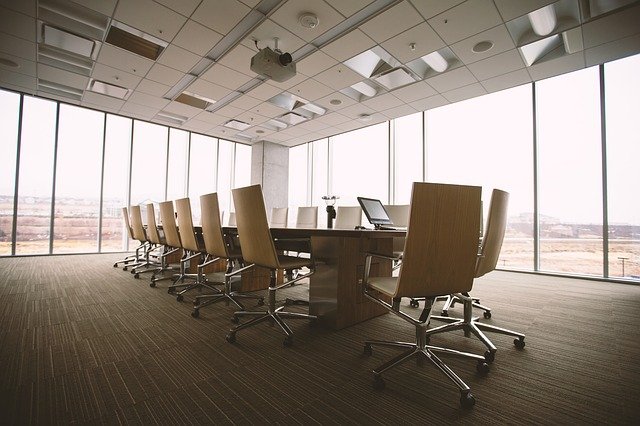
For decades, offices were designed around physical presence. Rows of desks, fixed seating, and rigid layouts reflected an outdated belief that productivity was defined by visibility. Remote work disrupted that assumption, proving that output, creativity, and accountability could exist without constant physical oversight. But it also revealed something else: while focused work can happen anywhere, collaboration, culture, and connection cannot be fully digitised.
This is where many organisations find themselves today—caught between downsized offices that no longer inspire teams to return, and remote structures that risk long-term disengagement, isolation, and cultural dilution.
A hybrid workspace is neither a scaled-down traditional office nor a café with Wi-Fi. It is a deliberate, adaptive environment built around choice—choice in how people work, where they work, and how often they come together.
In a hybrid model, the office is no longer the default destination five days a week. It becomes a purpose-driven space. Teams come together for moments that matter: brainstorming, decision-making, mentorship, onboarding, and social cohesion. This demands spaces that prioritise collaboration over occupancy, flexibility over permanence, and experience over efficiency.
Fixed desks give way to dynamic zones. Quiet areas coexist with collaborative rooms. Informal lounges enable conversations that don’t fit into meeting calendars. Spaces are designed to support multiple modes of work rather than enforce a single one.
Equally important is the psychological role of space. After years of blurred boundaries between home and work, employees seek environments that help them transition mentally—not just physically—into work mode. Well-designed workspaces provide structure, focus, and a sense of belonging that remote settings often lack. They signal intent: this is where ideas are shaped, problems are solved, and teams grow together.
Hybrid workspaces also acknowledge a fundamental truth: not all workdays are the same. Some days demand deep focus and solitude; others thrive on energy, discussion, and movement. A successful hybrid environment allows people to choose the setting that aligns with the task at hand. Productivity improves not because people are monitored, but because they are supported.
Another overlooked dimension is trust. Hybrid work is built on trust—between organisations and employees, managers and teams. Hybrid workspaces reinforce that trust by offering autonomy within a shared framework. People are trusted to decide when being together adds value, and the space is designed to make those moments worthwhile.
From a leadership perspective, this shift demands a move away from control-based thinking. Offices no longer function as tools of supervision—they are platforms for culture. The role of space is not to ensure attendance, but to inspire participation.
There is also a strong cultural implication. Company culture does not live in policy documents or virtual town halls alone. It is built through informal interactions, shared experiences, and everyday rituals. Hybrid workspaces become the physical anchors of that culture—places where values are expressed through design, behaviour, and interaction.
Importantly, hybrid does not mean one-size-fits-all. Different teams, industries, and stages of growth require different spatial solutions. The most effective workspaces today are modular, adaptable, and responsive. They evolve as teams evolve.
As we look ahead, the organisations that will thrive are those that stop treating space as a cost to be minimised and start viewing it as a strategic tool. A well-conceived hybrid workspace does not compete with remote work—it complements it. It gives people a reason to come together, not an obligation.
Hybrid work is here to stay. The question is whether our workspaces will remain rooted in the past or evolve to meet the realities of how people actually work today. The future of work is not remote or office-based. It is intentional. And intentional work requires intentional spaces.

Guest author Robin Chhabra is the CEO and Founder of Dextrus, a premium co-working space in Mumbai with close to 75,000 sq ft of workspace across the city. Any opinions expressed in this article are strictly those of the author.