




There was a time when speed in financial services was considered an advantage.
Today, it is the expectation.
Consumers no longer compare financial experiences with other banks. They compare them with the fastest experience they have had anywhere. This shift is not anecdotal, it is structural, and it is being driven by the evolution of financial infrastructure itself.
Consumers no longer compare financial experiences with other banks. They compare them with the fastest experience they have had anywhere.
What we are witnessing is the compression of financial journeys.
According to the PwC report Indian Payments Handbook 2025–2030, India’s digital payments ecosystem is entering a phase defined not just by growth, but by real-time, high-volume, infrastructure-led transformation. The report projects digital payment volumes to grow from 206 billion transactions in FY25 to 617 billion by FY30, highlighting how scale and speed are becoming inseparable.
At the center of this transformation is the expectation of immediacy.
The Reserve Bank of India, through its Payments Vision framework, explicitly defines the future of payments around systems that are fast, secure, accessible, and available “every time”.
This is a fundamental shift. Speed is no longer a feature layered onto financial services. It is being built into the design principles of the ecosystem itself.
In practical terms, this is most visible in onboarding and verification.
Regulatory developments in 2025 have reinforced this direction. Updated KYC norms introduced by the Reserve Bank of India now allow video-based identification, non-face-to-face onboarding, and OTP-based verification, enabling faster and more flexible customer acquisition while maintaining compliance.
What used to take days can now be completed in minutes, sometimes seconds. But speed alone does not define the experience. There is a critical distinction between speed and seamlessness.
A process can be fast but still feel fragmented. Seamlessness is achieved when multiple steps, verification, risk checks, authentication, are orchestrated in a way that removes visible friction. This is where infrastructure plays a defining role.
This is already reshaping how financial services are delivered. Financial interactions are no longer standalone. They are becoming embedded into broader ecosystems. Payments, lending, and verification are increasingly integrated into platforms where finance is not the primary function, but a supporting capability.
This is the rise of embedded finance, powered by speed.
At the same time, regulatory architecture is evolving to keep pace.
India’s updated payment system regulations in 2025 reflect a shift toward stronger oversight, adaptive frameworks, and technology-aligned governance, ensuring that rapid innovation does not compromise system stability.
This balance is critical. As systems become faster, the tolerance for failure reduces. Instant systems must also be resilient systems. Security, compliance, and reliability must operate at the same speed as transactions themselves.
There is also a broader implication for inclusion. India’s fintech ecosystem, now among the largest globally, continues to expand through digital payments, lending, and verification infrastructure.
As onboarding becomes simpler and transactions become instantaneous, access barriers reduce. Speed, in this context, is not just about convenience, it is about participation.
But perhaps the most important shift is this:
Consumers are no longer interacting with processes. They are interacting with outcomes.
They do not think about onboarding steps, verification layers, or settlement cycles. They expect completion. Instantly. Effortlessly.
This is why the future of consumer finance will not be defined by how fast systems operate.
It will be defined by how invisible they become.
Because in a world where speed is expected, the real differentiator is not seconds.
It is seamlessness.
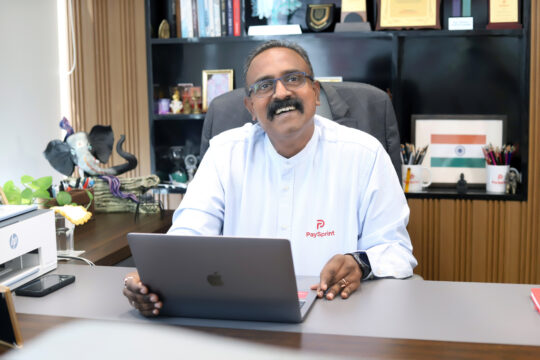
Guest author S. Anand Seenivasagan is the Founder and CEO of PaySprint, a next-generation fintech infrastructure company building unified banking, payments, verification, and escrow solutions for businesses across India. Any opinions expressed in this article are strictly those of the author.