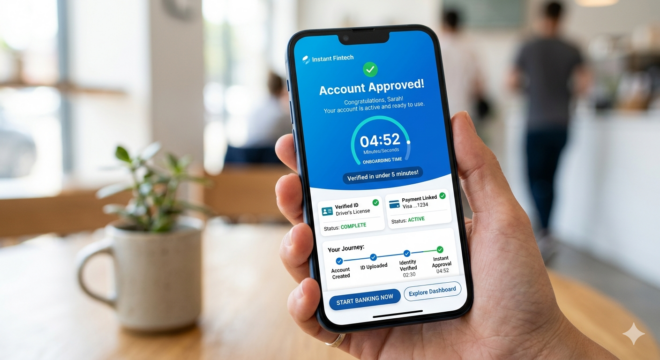




As businesses increasingly move customer onboarding and documentation processes online, Aadhaar-based eSign is becoming an important technology for simplifying digital document execution. While the structural shift away from field agents, paper trails, and manual loops offers massive reductions in customer acquisition costs (CAC), scaling this sovereign infrastructure across a diverse nation comes with hidden friction. From handling users with outdated mobile numbers to defending against hyper-realistic AI fraud, digital identity execution now requires far more than a basic API plugin.
While Aadhaar eSign dramatically lowers CAC compared to physical onboarding, companies are trying to balance this saving against the drop-off rates caused by users who do not have their current mobile numbers linked to their Aadhaar.
The Tech Panda spoke to Shyam Arora, Chief Executive Officer of Meon Technologies, a major player specializing in full-suite digital onboarding, RESTful APIs, and regulatory automation.

“Every rupee saved has to be weighed against the customers we lose at the OTP screen because their mobile numbers were never updated with UIDAI”
“Aadhaar eSign has genuinely changed onboarding economics,” says Arora.
“Cut out the field agent, the courier, the physical signature loop, and the savings on customer acquisition cost aren’t marginal; they’re structural. But at our end, we don’t treat that number as free money. Every rupee saved has to be weighed against the customers we lose at the OTP screen because their mobile numbers were never updated with UIDAI.”
Arora relates that they design for these gaps from the start.
“If Aadhaar OTP fails, the flow can move to Video KYC or offline XML-based signing instead of stopping. We also prompt users to verify their linked mobile number early, preventing verification failures. Done right, we keep most of the CAC advantage without losing the customers who don’t fit the ideal path.”
He points out that companies that only chase the cheapest acquisition number tend to miss this.
“The teams that build for the exceptions are the ones that actually convert at scale, because in a country this size, the exceptions still run into tens of millions of people,” he adds.
Securing the Authentication Layer Against High-Tech Spoofing
As generative AI and deepfakes advance, the Aadhaar eSign ecosystem is evolving to protect biometric authentication and OTP verification from high-tech identity fraud.
“This one keeps our engineering leadership up at night, honestly,” Arora responds. “Synthetic voice, video, convincing fake biometrics — none of this is theoretical anymore; it’s available off the shelf. So our response has to come from several directions at once, not one clever fix.”
“Synthetic voice, video, convincing fake biometrics — none of this is theoretical anymore; it’s available off the shelf. So our response has to come from several directions at once, not one clever fix.”
“On biometrics, our verification layer goes well beyond basic liveness checks like a blink or a head turn,” he adds as he explains the process.
Meon is using passive liveness signals, depth and texture analysis, and challenge-response prompts that are much harder for a pre-recorded deepfake to fake convincingly in real time. On the OTP side, the team doesn’t rely on the OTP alone anymore — device binding, SIM-swap detection, transaction velocity checks, and behavioural signals like typing rhythm all sit on top of it in their flow.
Hence, a stolen OTP by itself isn’t enough to get through.
“We also stay close to UIDAI’s own safeguards and share fraud signals with our banking and NBFC partners in near real time,” he says.
“We won’t say this is solved — it isn’t, and it won’t be. Fraud techniques continue to evolve; that’s why we design our system to detect and solve this risk at an early stage,” he further states.
Navigating DPDP Compliance
The Aadhaar eSign currently integrates with the evolving Digital Personal Data Protection (DPDP) Act, a process that might not be as smooth as desired yet and businesses must prepare for constant compliance changes.
“Right now, the fit is workable but not complete, and we advise our clients to plan accordingly,” says Arora.
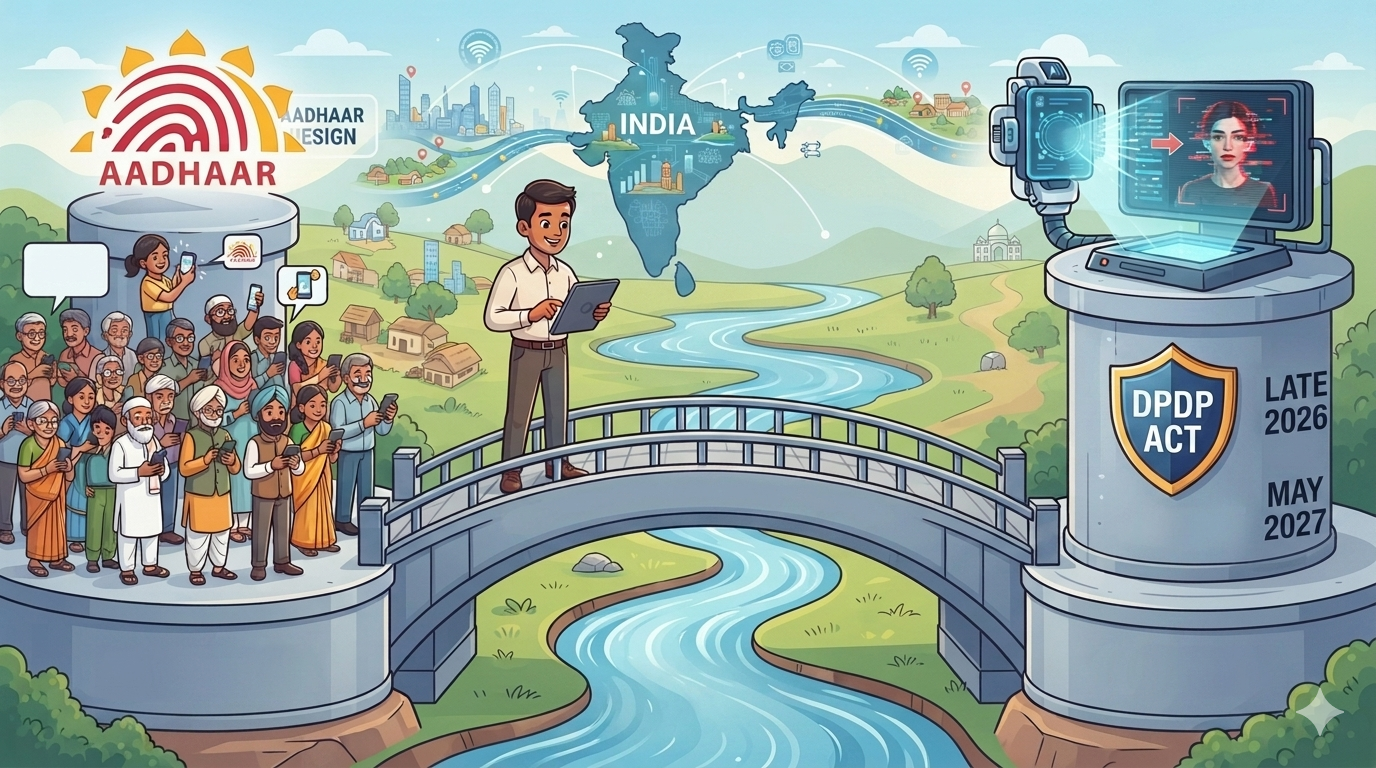
The DPDP Rules were notified in November 2025. The Consent Manager framework goes live in November 2026, and the full operational obligations, including consent, notice, breach reporting, data principal rights, will become enforceable from May 2027.
“So, 2026 is really the year to build, not the year to relax,” he reiterates.
“2026 is really the year to build, not the year to relax… Act now, or you’ll end up fixing it later under pressure and at a higher cost.”
He points out that for companies running Aadhaar eSign flows through the Meon platform, that means four things need attention now.
Move away from bundled, single-checkbox consent toward consent that’s specific to purpose, because blanket consent won’t hold up under DPDP.
Get ready to plug into the Consent Manager framework so that consent changes made anywhere are respected everywhere.
Tighten retention and purpose limits around the biometric and demographic data flowing through eSign, since that’s exactly what regulators will look at first.
And build out breach-notification processes now, because DPDP timelines run alongside CERT-In’s, not instead of them.
“Our compliance team is already helping clients start this work, because the businesses that begin now will be compliant by default when enforcement tightens in 2027. Act now, or you’ll end up fixing it later under pressure and at a higher cost,” he advises.
Bridging the Digital Divide with Phygital Trust & Localized Design
While Aadhaar eSign dramatically reduces onboarding costs, its expansion into rural and less digitally literate populations faces steep structural hurdles. For example, the Aadhaar-mobile linkage disconnect. Many rural users have changed their phone numbers without updating their UIDAI records, leading to massive drop-off rates at the critical OTP authentication screen.
Furthermore, standard digital onboarding flows suffer from high interface friction, often defaulting to English or using text-heavy, multi-step navigation that alienates first-time users. This technical alienation is compounded by a lack of digital trust, as users unfamiliar with digital document execution are often hesitant to complete self-service transactions without a trusted local agent or bank correspondent to guide them.
“A city user with decent English will push through a clumsy flow out of habit. A rural user won’t, and shouldn’t have to. What actually moves adoption here isn’t flashy — it’s basic discipline in design, and it’s something our product team has spent a lot of time on,” Arora points out.
“None of this is complicated technology. It’s disciplined execution — building it carefully and making sure it holds up in the field. That’s the difference between a demo that looks good and a solution that actually works in villages,”
Combined with environmental challenges like spotty network connectivity that causes OTPs to expire, these barriers mean that scaling digital identity in Tier 2 and Tier 3 markets requires a pivot away from rigid, urban-optimized workflows toward highly localized, resilient design choices.
However, beyond tech-savvy urban users, specific user experience innovations are driving successful Aadhaar eSign adoption among rural and less digitally literate populations.
“Regional-language interfaces as the default, not an option buried in settings, make the biggest difference we’ve seen,” he says.
Other innovations like voice guidance through each step, larger touch targets, icons instead of text-heavy screens, cuts drop-off meaningfully in deployments.
“We’ve also had good results pairing digital signing with a human presence, like a local agent or bank correspondent walking a customer through the step on a shared device. And error messaging matters more than people think — “transaction failed” makes a first-time user give up entirely, while a specific message with a clear next step keeps them going,” he explains.
“None of this is complicated technology. It’s disciplined execution — building it carefully and making sure it holds up in the field. That’s the difference between a demo that looks good and a solution that actually works in villages,” he adds.
The Cross-Border Challenge
Apart from rural populations, global ones like Non-Resident Indians (NRIs) too face challenges in adopting Aadhar. Efforts are underway to enable the underlying infrastructure of Aadhaar eSign to be adapted or federated to facilitate seamless digital onboarding for NRIs or international transactions.
Arora informs that Aadhaar eSign is built as Indian sovereign infrastructure, tied to a resident’s biometric record with UIDAI.
“NRIs who still hold a valid Aadhaar and a working Indian mobile number can already use our existing rails reasonably well, and we see strong usage from that segment for banking, mutual funds and property transactions,” he says.
“The path we’re building toward is federation: linking Aadhaar eSign with other trusted frameworks, like eIDAS signatures in Europe or KYC systems in the Gulf, so a cross-border deal can accept a locally trusted credential on one side and an Aadhaar credential on the other.”
The real challenge, he points out, is NRIs and overseas users with no Aadhaar at all, or a linked number that no longer works abroad.
“For them, stretching Aadhaar itself isn’t realistic, nor should it be — it was never meant to be a global identity system. The path we’re building toward is federation: linking Aadhaar eSign with other trusted frameworks, like eIDAS signatures in Europe or KYC systems in the Gulf, so a cross-border deal can accept a locally trusted credential on one side and an Aadhaar credential on the other. That’s a long-term effort involving regulators on both sides, not something we can build alone. But it’s the right direction, and it’s where we’re putting our long-term roadmap,” he adds.
The Road to 2027: Shifting from Simple APIs to Foundational Compliance
Ultimately, the true value of Aadhaar eSign lies not just in the cost-cutting efficiency of a successful digital transaction, but in how a platform manages the edge cases. As Arora emphasizes, building for a country of India’s scale requires meticulous design discipline, whether that means accommodating the tens of millions of citizens who lack updated Aadhaar-linked mobile numbers or deploying passive liveness detection to thwart deepfake attacks in real time.
Furthermore, with the DPDP Act’s Consent Manager framework arriving in late 2026 and full enforcement dropping in May 2027, the coming months represent a critical build phase for enterprises. By pivoting away from bundled consents, tightening data retention limits, and actively designing for the exceptions rather than the ideal path, the future of digital onboarding belongs to those who view compliance and security not as late-stage hurdles, but as foundational engineering priorities.