


Categories: Uncategorized

Entrepreneurship blooms in smaller Indian cities

Mumbai, Bangalore and Delhi are flagships cities for Indian tech and entrepreneurship. However, with a collective population of 31.4 million, competition is not only over-skilled workers, but also workspace. 

Where there is workspace available, it is often highly expensive due to higher demand in the five biggest cities.

Research conducted by Tracxn, a Bangalore-based research firm, confirmed that the 5 big cities (Delhi, Bangalore, Mumbai, Pune and Hydrabad), still remain the hottest spots for investment funding. It also shows how smaller cities like Ahmedabad, Chennai and Jaipur, are making a mark in the industry with 30 deals amounting to $34 million in funding in 2016.

The growth in these cities is highly encouraged by the Indian government. For instance, Golden Jubilee Biotech Park, an incubator aimed at women and backed by the federal government as well as the state government of Tamil Nadu, is focusing on supporting startups in tier-2 cities. The incubator’s CEO, Sudha Nair told Nikkei in an interview that infrastructure in these small cities is improving, adding “Instead of creating more job opportunities and congestion in big cities, it’s better we move to tier-2 cities.”

Following the same notion, Reliance Industries’ Chairman, Mukesh Ambani, reported “If, given the right tools and ecosystem, India can be a nation of a million startups.” Ambani refers to India’s youth which comprises 63% of the population and its potential to establish India as the leader of the Data-driven revolution. “Data is the oxygen of the digital economy and one cannot deny Indians of this vital, life-sustaining resource,” he added.

Startups such as Bodhik, a financial technology company, are relocating from first tier cities such as Mumbai for financial reasons. Bodhik relocated to Mohali after a decision by the company’s CEO, Sarabdeep Singh, who reported that not only is workspace rental far cheaper – one-third of the price of its counterpart in Mumbai – but labour too. “The cost of hiring a software developer is at least 40% lower in Mohali compared to Mumbai, A fresher [new employee] costs us about 15,000 to 20,000 rupees per month”, says Singh. “In Mumbai, it’s very difficult to find someone at this salary because of the high cost of living, and competition.”

Tarun Singh Uppal, the co-founder of Vnayaseconds Singh claims on employee costs.

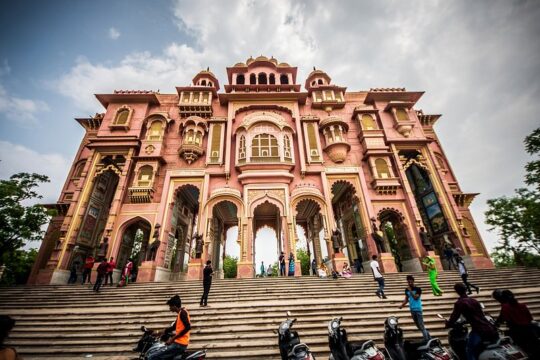
“The infrastructure here is geared towards crafts and textiles,” said Vishwas Shringi, CEO and co-founder of Voylla. Voylla, a jewelry retailer with more than 1,000 employees, launched in 2012 in Bangalore and then relocated to Jaipur – a city with 3-5 million population and high concentration of artisans.

Following Shringi’s example, expanding into smaller cities not only provides companies with monetary efficiency, but also allows them to tap into a new pool of human capital.

Omar Elorfaly

Crazed by modern technology and unexpected experiences around the world, Omar hops on the first ride possible towards random spots, seeking the next thrill

Recent Posts

Summit AI’s Rural Cyber Blindside: Voice-Cloned Scams Exploding in India’s Digital Heartland

The recent India–AI Impact Summit 2026 demonstrated a defining global inflection point — the transition…

2 days ago

Account Aggregator is emerging as the foundation of India’s open finance architecture

By enabling secure, consent-based financial data sharing, the Account Aggregator framework is laying the groundwork…

2 days ago

ImmuneBridge wants to make cell therapy work for everyone – starting with the factory floor  

There’s a quiet crisis in one of medicine’s most exciting fields. Cell therapy – the…

2 days ago

How AI is Changing Business: Hybrid AI is Coming

Lenovo and NVIDIA are pushing AI into its next phase, scaling real-time, production-ready systems that…

7 days ago

AI & the workplace: AI is changing the way we feel about our jobs

AI is changing how work gets done. It’s also changing how people feel about their…

7 days ago