



India’s AI story is entering a new phase, one defined by scale and also depth and distribution. As of December 2026, the country has overtaken the US to become the global leader in consumer AI adoption, signaling a shift that is as much social as it is technological. What sets this moment apart is not just how widely AI is being used, but who is using it, particularly the youth across Bharat.
India’s AI narrative is shifting from urban tech hubs or elite talent pools to Bharat and its rural youth adopting AI at scale. The story is inclusive of Tier-2 cities.
A new report by JanAI Youth AI Aspirations & Adoption Report titled ‘YouGraf.JanAI, shows that AI is no longer an urban or elite phenomenon. In rural India, 55% of youth are already using AI almost daily, with another 28% using it occasionally. Only 17% remain non-users, marking a decisive shift from curiosity to habitual use.
From Access to Aspiration
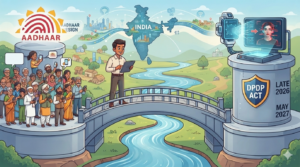
For many young Indians, AI has become a tool as well as a bridge. Nearly 46% of respondents use AI for language translation, while 33% depend on it for writing support. India has seen language as a barrier to opportunity for years. Today, these AI tools are aiding youth in competing in classrooms, job markets, and digital platforms that were previously out of reach.
“Youth are using AI to study and express; far fewer are using it to earn. The next phase must convert access into structured, local, livelihood-linked pathways—especially for young women in small-town India”. – Kanishka Chatterjee, Advisor, The/Nudge Institute and Supporting Partner
Kanishka Chatterjee, Advisor, The/Nudge Institute and Supporting Partner, said, “Inclusive AI demands urgency, but also precision. Youth are using AI to study and express; far fewer are using it to earn. The next phase must convert access into structured, local, livelihood-linked pathways—especially for young women in small-town India”.
Read more: From Lab to Bedside: AI Emerges as Healthcare’s Co-Pilot, Not Replacement, says Recent IEEE Awardee
The demand for that structure is already visible. While most young users are self-learning through platforms like YouTube and peer networks, 90% say they want government-certified AI courses, and 61% believe such certification would improve their employment prospects. The gap between informal adoption and formal pathways is emerging as one of the defining challenges of India’s AI journey.
Gender patterns further underline the complexity. Women are in the lead when it comes to communicative uses like study support and language, while men are more likely to make use of AI for job applications and income opportunities. These trends do show a widening base of AI-driven participation, but it is still uneven.
A New Geography of Talent
Beyond individual adoption, India’s AI shift is starting to focus on where talent is coming in from. According to a Randstad Digital Report, with cities like Chandigarh, Coimbatore, Jaipur, and Indore emerging as new hubs for AI, data science, and cybersecurity, Tier-2 cities are now growing nearly 2.5 times faster than Tier-1 cities when it comes to tech hiring.
At the same time, we see the nature of tech roles evolving. While traditional skills like Java and Salesforce still matter in the scope of jobs, demand is beginning to shift toward AI orchestration, cloud architecture, and leadership in security. Especially cybersecurity, is moving beyond defense in the perimeter toward AI-driven threat detection and response. This shift reflects an increase in automated and adversarial risks.
Though, unlike previous tech booms, this shift does not appear to be just hype. In fact, it is driven by structural changes in how organizations build, deploy, and govern AI.
Adoption at Scale
This transformation is also visible at the enterprise level.
“Adoption in India is no longer gradual, it is spreading rapidly across every sector,” said Mannuri Vamshi Krishna, Founder and CEO of SafeCredits. “What stands out is how naturally people are trusting AI for decisions that once required layers of manual effort. This shift is reducing operational costs while improving consistency and accountability. As systems learn and refine themselves, the room for human error will keep shrinking, especially in risk and compliance-driven environments.”
“What stands out is how naturally people are trusting AI for decisions that once required layers of manual effort. This shift is reducing operational costs while improving consistency and accountability. As systems learn and refine themselves, the room for human error will keep shrinking, especially in risk and compliance-driven environments.” – Mannuri Vamshi Krishna, Founder and CEO of SafeCredits
He adds that another important change is speed because decisions that took days are now made in moments.
“AI is also bringing discipline to data by unlocking value from previously hidden information. For Indian businesses this means moving from reactive judgment to proactive intelligence. The real value lies in building confidence at scale through systems that learn continuously and improve outcomes for everyone involved,” he explains.
Across Asia Pacific, 66% of organizations are deep into adopting AI, with India close behind at 59%, according to the Lenovo AP CIO Playbook 2026. No longer confined to IT departments, AI is becoming necessary across departments like customer service, marketing, operations, and finance, even as non-IT teams are increasingly releasing funds for these initiatives.
Still, we detect caution in organizations. The reason? Over 80% of organizations might have expectations of positive ROI from AI, the fact remains that scaling beyond pilot stages is still a challenge. This indicates that there is still definite need for governance, operating models, and lifecycle management.
Investment, Governance & the Next Phase
For investors, this moment is as much about discipline as it is about opportunity.
“At a time when global markets are navigating volatility driven by AI-led disruption and valuation recalibrations, clarity around execution pathways and private sector participation will be closely watched,” said Anooshka Soham Bathwal, Founder and CEO of Dhanvesttor. “The ongoing focus on innovation, human capital and institutional readiness is encouraging. We believe sustained follow-through will be key in translating technological ambition into productivity gains and long-term market confidence.”
“At a time when global markets are navigating volatility driven by AI-led disruption and valuation recalibrations, clarity around execution pathways and private sector participation will be closely watched”. – Anooshka Soham Bathwal, Founder and CEO of Dhanvesttor
That discipline is reflected in hiring trends. India’s demand for AI professionals is projected to reach one million by 2026, but we see that the fastest-growing roles are not just those that build AI but those that help govern it. The way ethics, risk, and compliance are becoming relevant as career options shows that responsible AI deployment is here to stay. And that’s good news.
The Bharat Factor
India’s AI narrative is shifting from urban tech hubs or elite talent pools to Bharat and its rural youth adopting AI at scale. The story is inclusive of Tier-2 cities becoming innovation centers, even as enterprises quietly redefine how they get work done.
Read more: Anthropic Mythos Sparks Global Cybersecurity Fears with Autonomous ‘Superhacker’ Capabilities
India has overcome the challenge of access, but the problem of conversion, turning widespread usage into meaningful economic opportunity, remains. If India can bridge that gap, it will not just lead in AI adoption, but in building one of the world’s most inclusive and resilient AI talent ecosystems.