

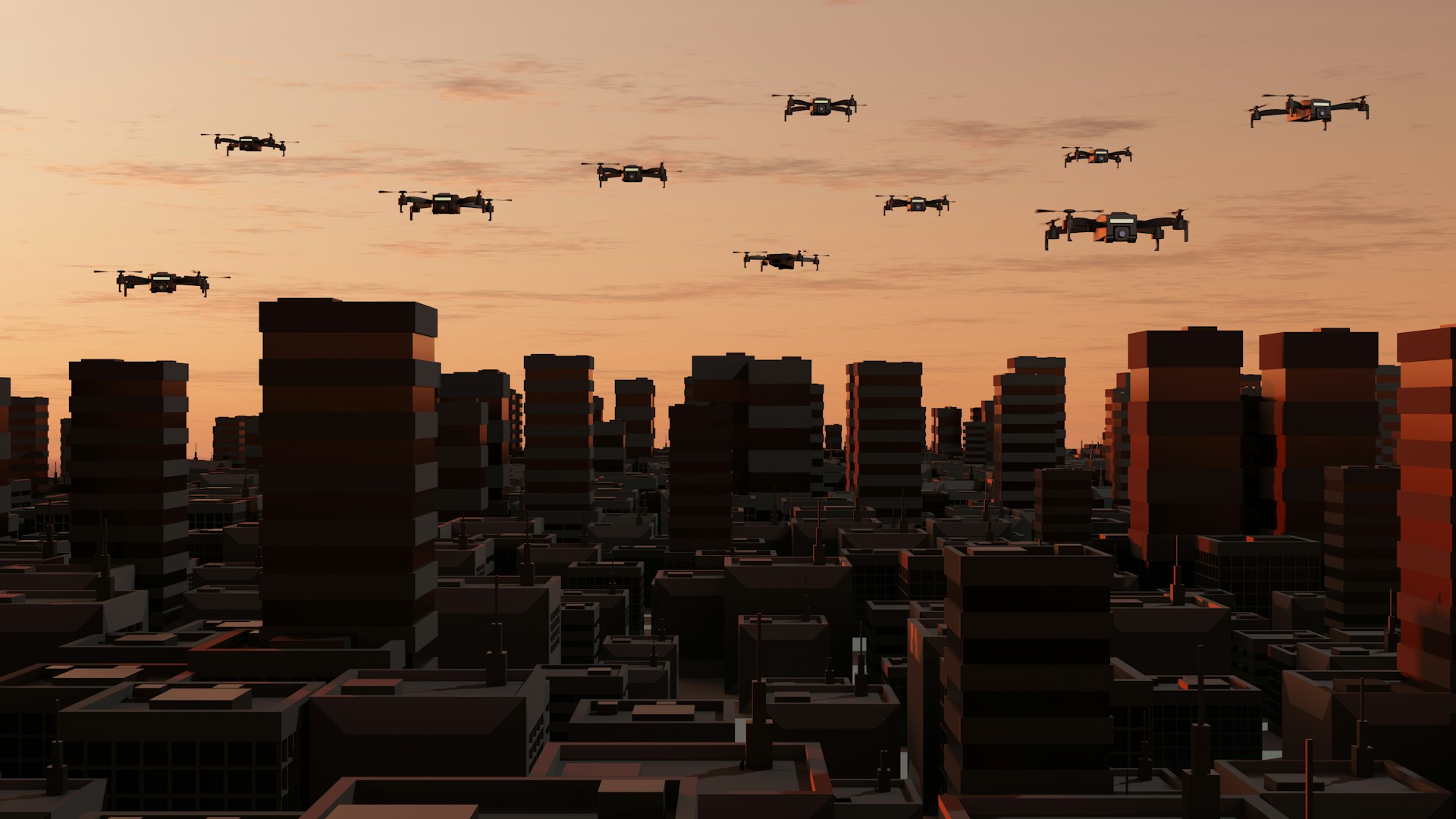


Drones have spent much of the past decade being associated with cameras, mapping and surveillance. But as autonomous systems become more capable, the technology is finding a new role: performing physical tasks that traditionally require people to work in difficult or high risk environments.
The shift is opening new commercial applications for drones across industries such as agriculture, construction, infrastructure inspection, logistics and maintenance.
According to Grand View Research, the global commercial drone market was valued at $24.38 billion in 2025 and is projected to reach $52.06 billion by 2033, growing at a 9.3% CAGR. The research firm points to automation, AI powered analytics and high resolution imaging as some of the factors supporting the expansion of commercial drone use.
Fortune Business Insights estimates the commercial drone market at $17.34 billion in 2025 and projects it could reach $65.25 billion by 2032, reflecting a 20.8% CAGR. Its analysis identifies inspection and maintenance, agriculture, mapping, surveillance, delivery and logistics among the major commercial applications.
Commercial cleaning is one example of how the technology is moving into physical work.
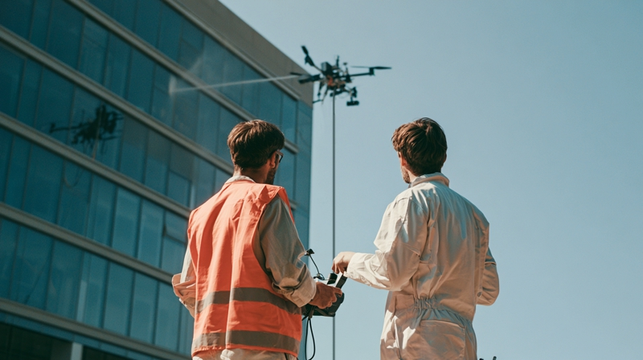
Building exteriors, windows and other elevated surfaces can require workers to use lifts, ropes or other access equipment. Drone technology is creating an alternative for some of these jobs by allowing operators to control cleaning equipment from the ground.
SkyPSI is building its business around that idea, using drones to provide commercial cleaning services while creating a model that allows independent operators to run businesses using the company’s technology.
Turning drones into business tools
SkyPSI launched in the Dallas Fort Worth area with $5 million in funding from founder and CEO Vic Pellicano.
The company provides drones, training and certification to independent operators and connects them with commercial cleaning contracts. Its initial services include commercial and high rise window cleaning, drone pressure washing and drone soft washing.
The model is different from simply selling a piece of robotic equipment. Operators receive access to technology while SkyPSI supports areas such as training, sales and marketing and provides access to commercial jobs.
“We connect them with commercial properties, we bring them into jobs we’ve already won, we teach them to sell themselves,” said Pellicano. “We’re the company behind them, supporting them technically, in sales and marketing, everything, so we’re just helping them out as they grow their businesses.”
The company is targeting hotels, senior living communities, office buildings, multifamily and HOA communities, medical facilities, parking structures and retail and mixed use developments. It plans to initially expand across Dallas Fort Worth and the Texas Triangle before entering additional US markets.
The broader drone market is also becoming more closely connected to AI and autonomous systems. Grand View Research estimates that the global drone market was worth $83.8 billion in 2025 and could reach $182.4 billion by 2033, with AI powered autonomous systems, improved batteries and advanced imaging sensors contributing to the expansion of drone capabilities.
That evolution could make drones useful for increasingly complex physical tasks rather than simply collecting aerial information.
For SkyPSI, the immediate application is cleaning. But its business model points toward a broader opportunity for commercial robotics: combining specialized machines with training, services, customers and operational support.
Instead of requiring businesses to purchase and operate their own drone fleets, a specialized company can make the technology part of an existing service business.
That approach could also make drones more accessible to smaller operators while allowing companies to apply the technology to specific physical tasks.
As drones become more capable and autonomous, their next wave of adoption may come not from replacing entire occupations, but from changing how certain physical jobs are performed.